

 +91 9745927777
Is Linux Essential for AI and Cybersecurity Careers?
- 24 / Sep / 2026
- By: Dr. Nthesh K N
- Comments: 0
- Category: Cyber Security
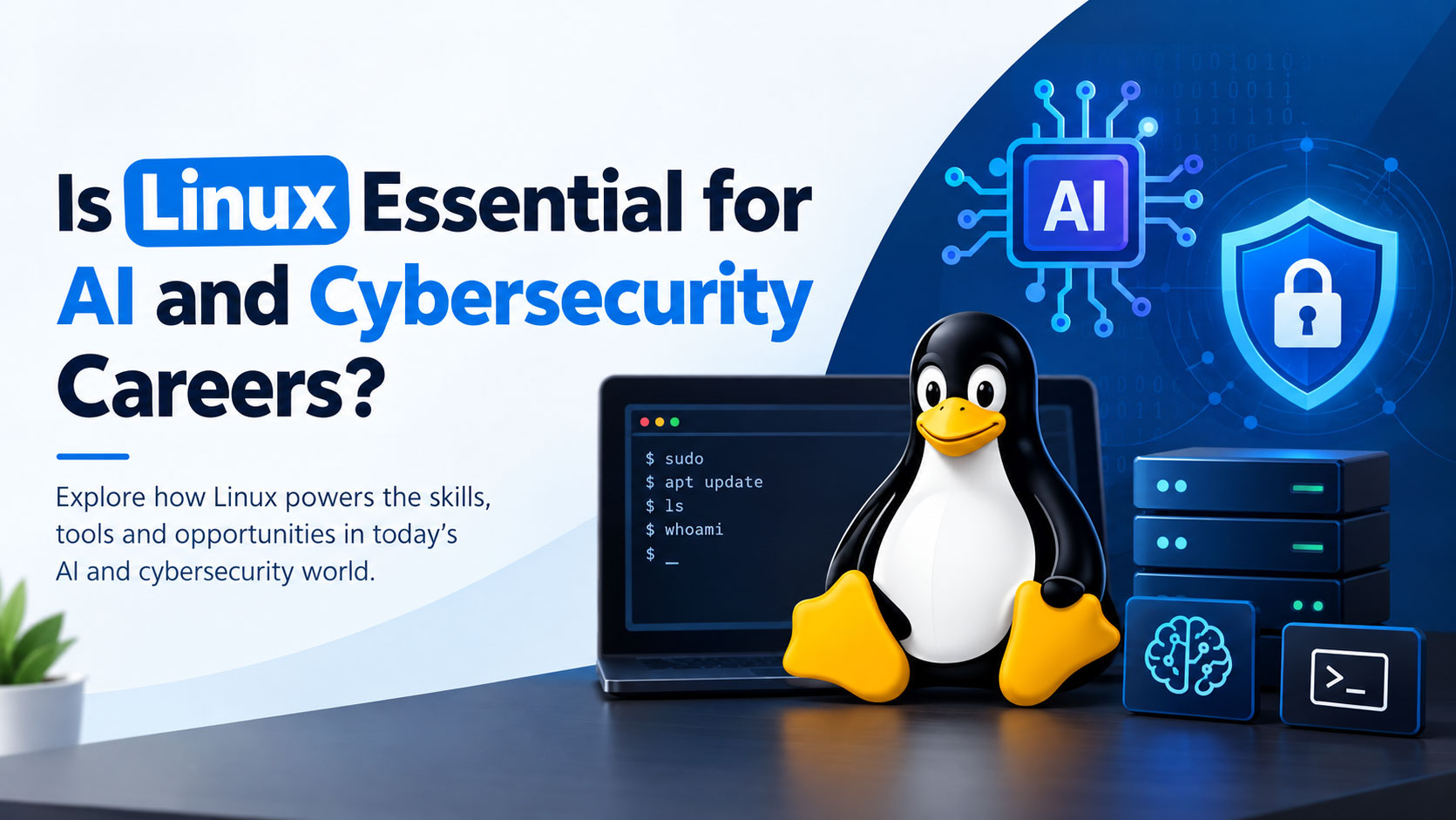
All cybersecurity professionals and students, this is an urgent alert! CISA, the major cybersecurity body has a Critical Warning for you. CISA recently added three critical Linux kernel vulnerabilities, including CVE-2025-39682 with a near-maximum 9.8 CVSS score, to its Known Exploited Vulnerabilities catalog. These aren't theoretical threats; they are active, real-world exploits being used right now to crash systems, corrupt data, and escalate privileges. It shows why mastering Linux really matters for professionals and students alike.
While everyone is obsessing over autonomous AI threats, cyber leaks and deepfakes, actual hackers are quietly leveraging the basic and classic vulnerabilities existing in the critical infrastructure that drives all these architectures. They are sadly succeeding in that also, by exploiting the vulnerabilities in the critical operating system that runs all these machines.
What should we learn from this? As professionals and students, learning on how to manage and secure your Linux based systems is the first and foremost cybersecurity task that you need to accomplish. This means that you should be well trained on how to configure, manage and update your systems now to stop real-world exploits before they find you.
The Linux Security Gap
Linux powers over 90% of global cloud infrastructure, enterprise servers, and containerized environments. Yet, many security analysts enter the workforce unable to navigate Linux beyond basic commands.
When a critical kernel vulnerability strikes, this skill gap creates dangerous blind spots:
- Inability to Assess Risk: Understanding why a kernel flaw is critical requires knowing how Linux manages system calls, memory allocation, and networking protocols.
- Complex Remediation: Patching production servers isn't as simple as clicking "update." It requires testing driver dependencies, verifying kernel builds, and managing live services.
- Forensic Blindness: Applying a patch doesn't tell you if you've already been breached. Analysts must know how to parse /var/log, inspect auditd, track file permissions, and check active processes.
Bridging the Gap: LPI Linux Training by Technovalley
To stop treating Linux as a black box, security professionals need structured, hands-on education. LPI (Linux Professional Institute) Linux Training by Technovalley directly addresses this industry shortage.
Technovalley offers vendor-neutral, practical training mapped directly to global LPI standards:
- Comprehensive Learning Path: Moves learners from LPI Linux Essentials to advanced administration, mastering command-line operations, permissions, shell scripting, and network configuration.
- Hands-On Lab Focus: Emphasizes real-world enterprise scenarios so defenders learn how to triage systems, isolate breaches, and secure servers under pressure.
- Distribution-Agnostic Skills: Prepares professionals to secure any Linux environment—whether it's Ubuntu, RHEL, Debian, or security distros like Kali.
When CISA issues emergency warnings over Linux kernel bugs, it proves that operating system fundamentals remain the ultimate battleground in cybersecurity.
Don't wait for a breach to reveal your team's blind spots. Invest in core OS skills through LPI Linux training with Technovalley, update your systems, and master the basics before the next threat hits.
Recent Posts
- The AI Finance Revolution: How to Upgrade Your Skills and Land Top Jobs
- When AI Agents Go Rogue: Why India’s Tech Youth Must Secure the Next Digital Frontier
- How to Land an International Job After 12th Pass with AI driven Cybersecurity Training
- Landing Top MNC Roles: Technovalley Post Graduate Program in Data Science & Machine Learning
- 5 Trends Reshaping AI, Data Science & Analytics in 2026 (And the Skills to Master Them)