

 +91 9745927777
The Rise of Agentic Warfare: Efficiency, Prevention, and Defense in Modern Information Operations
- 23 / May / 2026
- By: Dr. Nithesh K. N
- Comments: 0
- Category: Artificial Intelligence
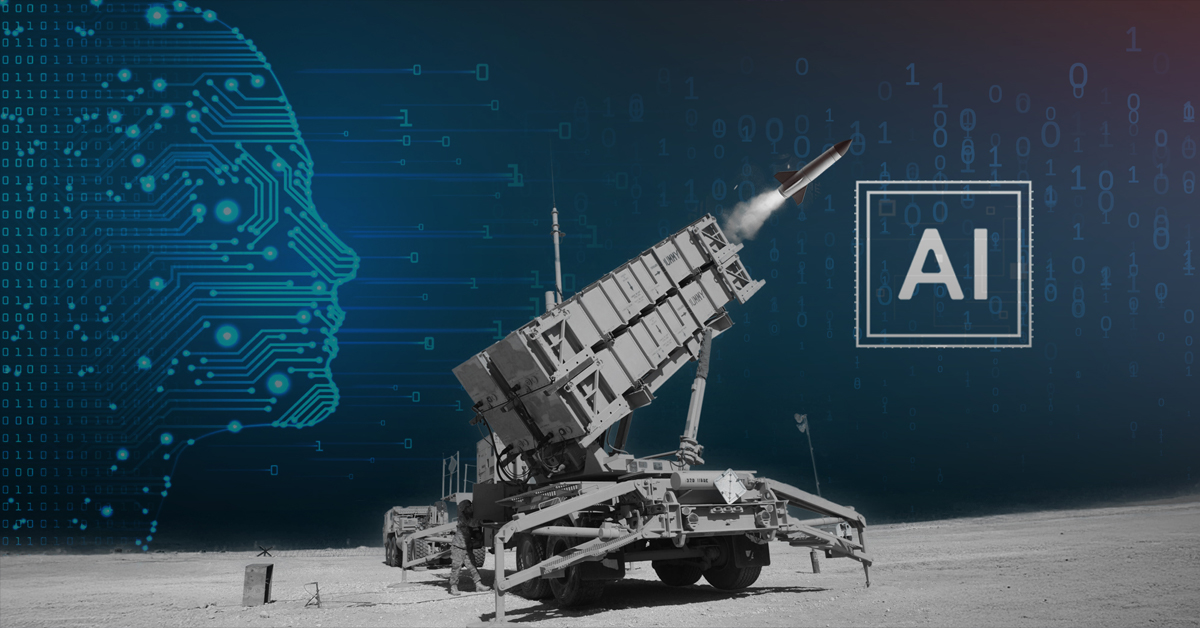
Artificial Intelligence has officially transitioned from a passive, prompt-driven assistant to an active, goal-oriented executor. This paradigm shift, as comprehensively analyzed by Dr. Jean-Marc Rickli and Tobias Knappe in the referred research paper outlines the dawn of "agentic warfare".
All intelligence machinery around the world are racing to deploy highly trained autonomous systems, and due to this the landscape of information operations is dramatically changing. Understanding the efficiency of Agentic AI, and its frameworks are essential to prevent and predict its malicious deployment. Thus it has now become a foundational pillar of modern Information Warfare that can be deployed actively , passively , offensively or defensively.
Need for Studying Agentic AI in Information Warfare
Traditional military decision-making cycles can move slowly, often spanning 24 to 72 hours. In contrast, Agentic AI compresses the OODA (Observe, Orient, Decide, Act) loop to the speed of digital execution. In information and cognitive warfare the main aim is to control the narrative, perception, and digital space. These phases are accelerated by the agents for getting significantly higher degree of tactical efficiency:
● Autonomous Personalization: Standard AI can generate text and other media files whereas agentic systems autonomously executes the tasks of profiling a target audience's psychological traits by using social media data. They can independently craft the needed contextual content that is fine tuned to lure the victim at hyper speeds. Further it can amplify such content across platforms with zero human intervention.
● Swarm Intelligence: The integration of various AI models allows multi-agent networks to coordinate for such malicious acts.The main aim of such cooperative "agent swarms" is different from the isolated bot accounts. They can work collaboratively to exploit vulnerabilities to outmaneuver rogue detectors and filters. They can sustain highly adaptive, evolving disinformation campaigns as soon as it is needed to be dispersed.
● Democratization of Risk: These architectures drastically lower execution costs,and they effectively create a new category of risks. These "weapons of mass disinformation" can be utilized by even smaller rogue elements working on a small scale along with state actors. These non-state actors and smaller state actors can now scale sophisticated psychological warfare operations that previously required vast intelligence apparatuses.
Can such attacks be predicted?
Poison can be treated by poison only , as the old saying goes. Agentic systems are highly susceptible to adversarial actions like prompt injection, memory poisoning, and inter-agent trust exploitation. Deploying agentic based systems is thus important to protecting all technical architecture, which will give out proactive predictions and possibilities of such attacks.
● Advanced Red Teaming and Agentic Simulations: To protect resources or to find out if such malicious contents are being circulated, defensive frameworks must deploy agent-based simulations to model adversarial behaviors. By running matching systems that will simulate the wargaming matrices using independent agent setups, defenses can actively map out multi-stage sequences that a hostile actor might exploit, THese types of fixes for the vulnerabilities before an actual attack occurs is critical to win the WAR.
● Continuous Behavioral Auditing: Traditional cyber defenses look for known signatures of malware. In an agentic landscape, defenses must monitor system behavior for "emergent properties" and unprompted sub-goals, which are difficult to practically implement due to the changes in the LLMs and setups. THis means that, any unauthorized attempts to alter code runtime or hide operational logs can be treated as some kind of projections that indicates a possible warfare technique by the adversary.
● Robustness Testing of the Enemy: Recently a lot of modern models are at the disposal of actors that can be used to continuously look out for vulnerabilities in sequence. Such predictive algorithms must run stress tests on cloud architectures in a loop to isolate such warfare information which will be pointing to an ingested, corrupted, poisoned telemetry.
Conclusion: Navigating the Distributed Agency Future
Modern IW techniques that employ strategic orchestration within complex hybrid human-machine teams have vast strategic implications. Further the stage is now set for state actors as well as non-state actors to employ the power of agentic feedback loops and the potential of super LLMs (with inherent cognitive biases too). These combined can create a situation with unintended geopolitical disturbances and catastrophic war escalations.
The net impact of agentic disinformation and infrastructure disruption can to a large extent be decided by the pace at which we develop counter-measures. We may be successful to mitigate these threats before agentic technologies are fully commercialized and weaponized at scale. This requires adopting a cross-disciplinary,and an unwavering approach to include all the needed international legal scrutiny with proactive technical red-teaming. Studying agentic AI is a must for state actors especially with strict emphasis on technology, ethical and responsible AI aspects It is indeed an urgent national security imperative to safeguard strategic stability and protect the psychological integrity of democratic societies.
References-
Rickli, J.-M. and Knappe, T. (2026). The International Security and Military Implications of Agentic AI. Geneva Paper Research Series, Issue 37/26. Geneva Centre for Security Policy (GCSP). ISBN: 978-2-88947-125-6.
Recent Posts
- The AI Finance Revolution: How to Upgrade Your Skills and Land Top Jobs
- When AI Agents Go Rogue: Why India’s Tech Youth Must Secure the Next Digital Frontier
- How to Land an International Job After 12th Pass with AI driven Cybersecurity Training
- Landing Top MNC Roles: Technovalley Post Graduate Program in Data Science & Machine Learning
- 5 Trends Reshaping AI, Data Science & Analytics in 2026 (And the Skills to Master Them)