

 +91 9745927777
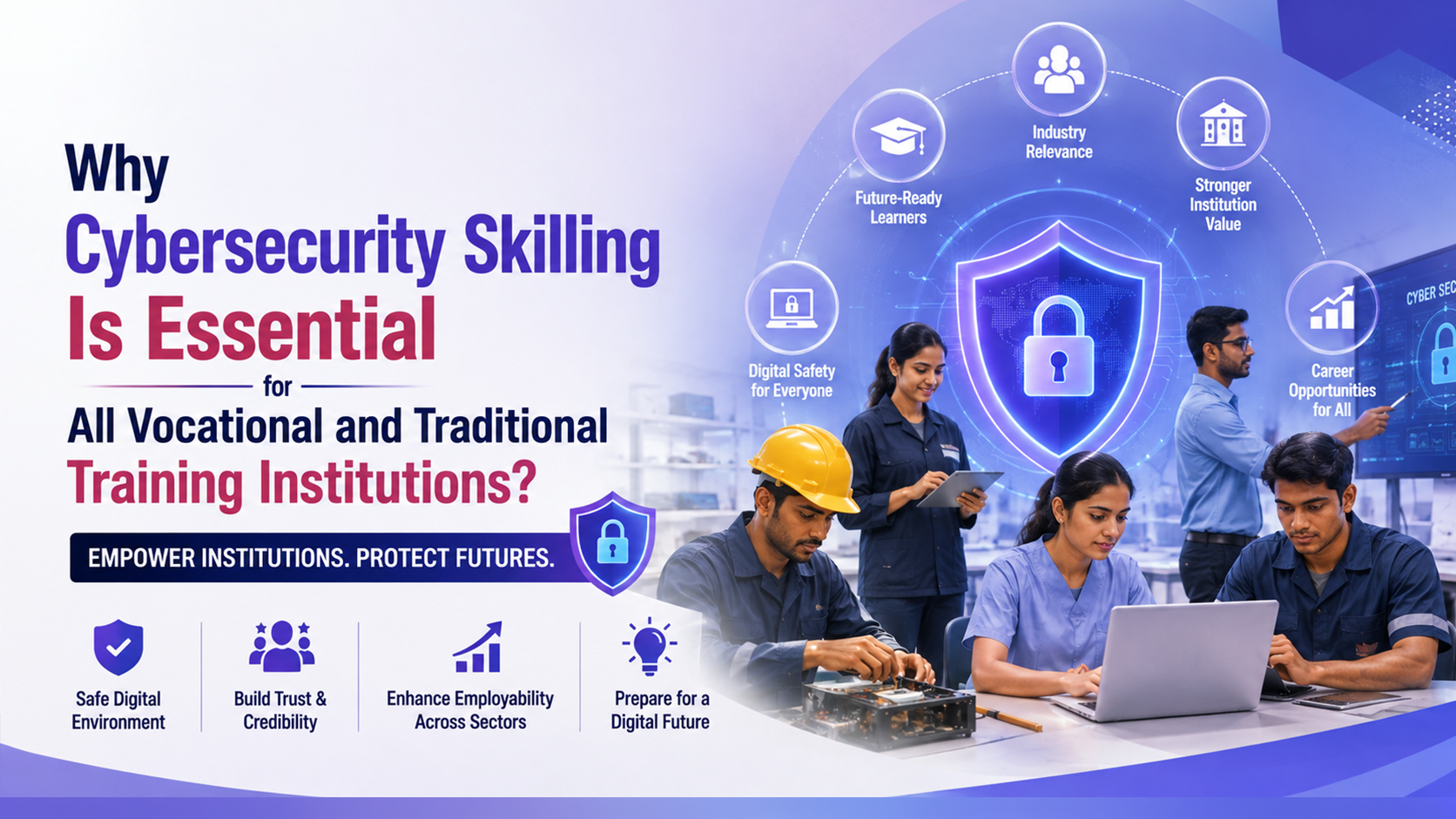
Why Cybersecurity Skilling Is Essential for All vocational and traditional training institutions?
- 24 / Aug / 2026
- By: Dr. Nthesh K N
- Comments: 0
- Category: Cyber Security
Cybersecurity skilling is an essential exercise for all vocational institutes. But is it essential for non-technical institutions also? Here we are talking about the application of such skills that can be applied to both IT and non-IT streams and the courses should be given as an add-on even at the school level. This has gained much importance because digital threats impact every society member. Families. Economy, whether micro or macro and without doubt every modern industry. Educators and planners have to make students learn the basic cyber hygiene and data defense mandatory for both technical and non-technical careers. Technovalley Software India Private Limited is a pioneer in imparting cybersecurity and AI related curriculum to thousands of students for the last decade and such integration of specialized pathways from providers like Technovalley bridges the gap between traditional coursework and industry-ready defense readiness. Moreover, having perfect cybersecurity awareness, and defense mechanisms are so essential for the school’s and system’s reputation,because even a minor incident related to such domains can affect the goodwill and reputation of the entire stakeholders and organizations.
Building Digital Resilience: Why Cybersecurity Skilling Belongs in Every Vocational Curriculum
Cyber security is affecting every digital resource that we use or has applications in every person’s daily lives and as cyber threats target everything from education, infrastructure ,healthcare and even to financial organizations , power infrastructure and to local businesses, cybersecurity is no longer a restricted domain for elite computer science graduates. It is like having a life jacket while our beloved ones swim in the vast ocean of digital cyberwaves and is essentially a foundational life and career skill.
Why Cybersecurity is Essential for All Vocational Institutes
● Universal Threats and Easy Exposure to that: Non-technical sectors like government, schools. Commercial establishments, healthcare, and the logistics sectors all handle sensitive digital data. Nowadays they all face constant phishing or ransomware risks.
● New Job Market Requirements for Placements: Entry-level positions in all sectors are getting affected by AI driven cyberattacks that are highly pervasive and targeted. This is happening across administration, finance, and manufacturing sectors. There is a need for expect baseline security awareness and cyber resilience. The openings for cyberaware workers are increasing hence.
● Workforce Gap:As all industries need such cyberwarriors and the number of such skilled persons are less, industries are experiencing severe global shortage of security talent. This opportunity can be capitalized by means of early vocational exposure that will definitely open high-value career paths.
Integrating Technovalley Programs into Education
Vocational training can be integrated into all modes of training in every specialization including arts/social, science, commerce, medical, law, technology and engineering. These can seamlessly moulded and packaged in the lesson plans, starting from basics to advanced modules through structured cooperation models:
● For Technical Programs (IT, Electronics, Engineering): Educational planners can easily embed rigorous offensive and defensive security training, which are of high demand through our industry, enabling students to achieve good salaries as soon as they graduate or even as part-time during their studies. These can include courses such as the Certified Ethical Hacker (CEH) or Certified SOC Analyst (CSA) pathways and can have hybrid modes of learning. All the practicals of CEH and SOC can be included directly into lab components.
● For Non-Technical Programs (Business, Arts, Social/ Secretarial): As handlers of data and also due to the reason that they are the generators of business/ideas, iIntroducing foundational data privacy, secure communication, and threat recognition modules are important to foster an institutional culture of safety.
● Hands-on Labs and Internships: All these can lead to more exposure to labs and internships by utilizing simulated enterprise environments and practical bootcamps to transition students from passive learners to active digital defenders.
Conclusion
Integrating cybersecurity into vocational education is no longer an option that educational planners should take as an option. But it is a critical necessity for safeguarding our digital economy. By equipping both technical and non-technical students with robust & industry specific security skills, institutes can directly bridge the global talent gap and future-proof their graduates' careers, even if they are studying non-IT subjects. Partnering with specialized training leaders like Technovalley Software India Pvt Ltd. ensures that this education remains practical, industry-aligned, and deeply impactful.
Recent Posts
- AI vs. AI: The New Frontier in Cybersecurity Strategy- Learn These Courses To Make Your Career Prospects Bright
- Why Cybersecurity Skilling Is Essential for All vocational and traditional training institutions?
- Elevating Tech Careers: The Strategic Value of Accredited Institution Certification Programs in IT
- What Is Agentic AI? A Beginner's Guide for 2026
- From Learning to Launch: Building a High-Tech AI Career & Startup in 2026