

 +91 9745927777
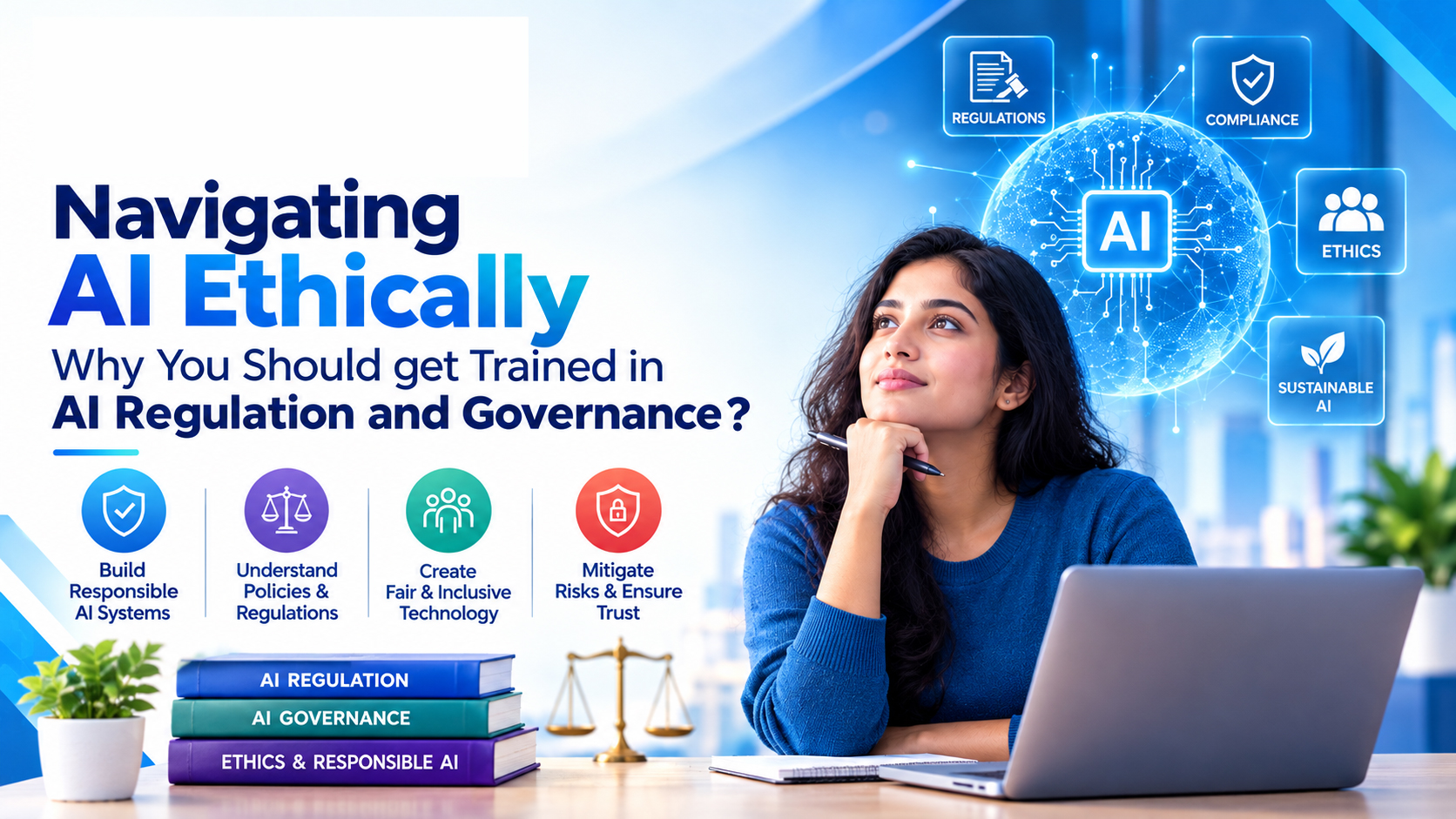
Navigating AI Ethically- Why You Should get Trained in AI Regulation and Governance ?
- 18 / Sep / 2026
- By: Dr. Nthesh K N
- Comments: 0
- Category: Artificial Intelligence
Artificial Intelligence is no longer a distant project in the pipeline. Its not just a boardroom buzzword, but rather it is powering the operational speed of corporations, speeding up decision-making, and automating different processes across industries. But as we know, rapid AI adoption is seen to be bringing complex responsibilities.
India has enacted the Digital Personal Data Protection (DPDP) Act in line with the EU AI Act for all digital and AI frameworks to manage the techno-legal governance for corporates, governments and other entities who are data fiduciaries and data principals. These regulations and the managing bodies are tightening controls around automated systems globally, which every digital professional needs to be trained at as it involves strict penalties for non compliance, as ignorance of legal framework compliance can be never an excuse.
Whether you are an IT professional, software developer, business leader, or risk officer for entities handling data, understanding AI regulation and governance is essential to avoid compliance penalties, data breaches, and reputational damage.
What Is AI Regulation and Governance?
AI Ethics and Responsible AI centers on principles like fairness, transparency, and harm avoidance,whereas AI Governance gives you the needed operational framework that turns those principles into actionable rules.
Effective governance should also be part of your knowledge bank as it ensures that AI deployment stays within legal and ethical boundaries as needed by regulatory frameworks. These include Data Privacy & Protection,Risk Categorization,Model Transparency, 7 Third-Party Risk.
● Data Privacy & Protection:Data input security is what is important here and it ensures that there is compliance with regional regulations like the DPDP Act,and GDPR.
● Risk Categorization: Get trained at how to classify AI models based on risk. These can include low-risk utilities like basic grammar checkers to high-risk automated decision systems which can include credit scoring or hiring tools.
● Model Transparency: Models and applications based on AI that are developed should be verified for tracking model’s decisions to avoid algorithmic bias, and understanding that is important in reducing such damages.
● Third-Party Risk: The external APIs that your applications access, GenAI tools, and third-party models need to comply with internal compliance standards so that liabilities due to risks posed to third parties are avoided. This needs to be understood.
Key Areas of AI Governance
AI governance is an important aspect that needs deep understanding across four critical standards for keeping automated systems safe and legally compliant. First is the Compliance & Legal standard that allows alignment of systems with global standards to prevent costly regulatory penalties. Second is the Responsible AI & Safety standard that uses red-teaming and bias testing. It is used to protect against model hallucinations and security exploits. Data governance is another important one that supports the above two and manages pipeline consent and lifecycle mapping. The last one is Model Operations (ModelOps) providing continuous auditing and drift monitoring to maintain system safety post-deployment.
How Technovalley Programs Bridge the Information Gap
Understanding compliance policies as well as technical implementation is very much required for bridging the above skills that are very much in demand for any digital company because most of their services have pivoted to AI driven technologies. This is where specialized training programs from Technovalley Software India provide a structured pathway.
Technovalley offers comprehensive technical and enterprise training designed to build real-world skills in building, securing, and deploying compliant AI systems.
Programs like the Technovalley Certified AI & ML Expert and the PG Program in Agentic Artificial Intelligence move beyond basic coding and provide the learners with hands-on exposure to model deployment, enterprise AI automation, and responsible AI practices. You will get profound and rigorous training on how to audit data pipelines and monitor model behavior in production environments.
Further , Technovalley’s specialized tracks like Certified Offensive AI Security Professional (COASP) focus on the technical security side of governance. The key focus is on securing AI infrastructure & how to understand and mitigate such risks by learning adversarial testing, red-teaming, and vulnerability assessment to protect AI pipelines from exploitation.
For tech professionals, leaders and architects, understanding enterprise-ready architecture knowledge is a must and Technovalley programs help you to break down multi-agent orchestration, cloud infrastructure, and data lifecycle management. This knowledge is vital for establishing inventory protocols, setting up review checkpoints, and assigning ownership across corporate AI assets.
Getting Started
Navigating AI regulation is no longer an option with the introduction of stricter data privacy and IT laws in India also , but there is no need to panic. Your digital activities don't have to stop the innovations that AI is offering, out of fear of repercussions, but you need correct training for building technology that scales safely. By mastering both the legal standards and technical safeguards, professionals and organizations can deploy AI with confidence, by mastering these technologies by enrolling in Technovalley’s advanced AI programs.
Recent Posts
- CompTIA Cloud+ Certification: Build a Career in Cloud Operations and Multi-Cloud Engineering
- Why LPIC-1 Is the Best Linux Certification to Start Your IT Career in 2026
- CompTIA Security+ Certification: Build Your Cybersecurity Career with Industry-Recognised Skills
- Bridging the Cyber Talent Gap: Why Global Certifications along with Hands-On Skilling Are Non-Negotiable for Job Readiness
- Cybersecurity Roadmap 2026: From Beginner to Job-Ready