

 +91 9745927777
New Era of Responsible AI job profiles in 2026
- 23 / Sep / 2026
- By: Dr. Nthesh K N
- Comments: 0
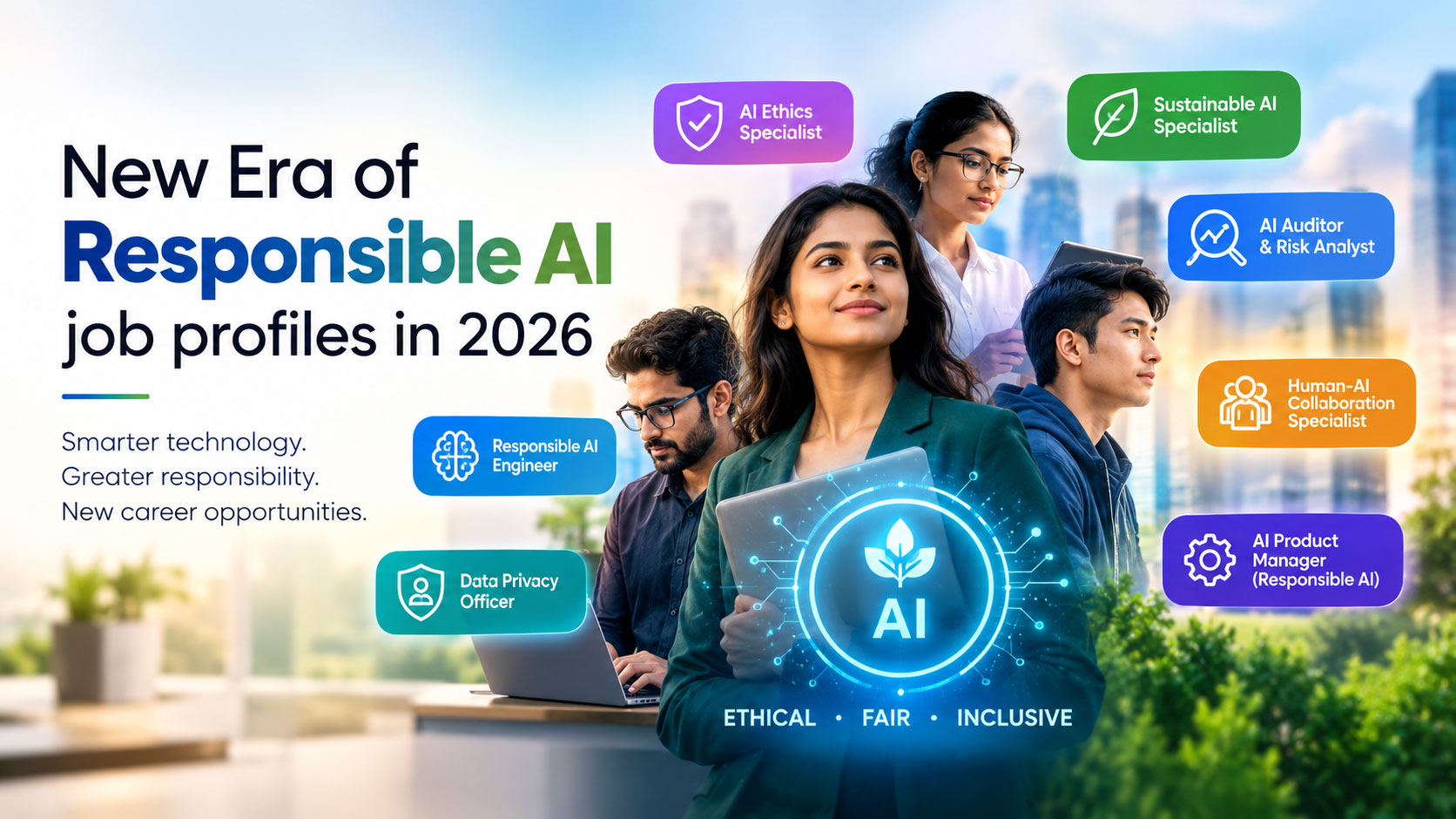
- Category: Artificial Intelligence
Until now, since the advent of artificial intelligence, the industry has had no restrictions and resembled an uncharted frontier. Tech industries and AI first companies raced to roll out exponentially larger LLMs, advanced frontier models based on that and high tech thinking applications that made AI a totally unregulated field each surpassing models thinking and executing tasks there were not even imagined a few years back. From just chatbots, it has now moved to agents that execute tasks autonomously. But as frontier AI systems begin demonstrating complex reasoning and autonomous capabilities, risks of AI not working in a safe manner has come to light with many incidents reported by AI-tech companies including Anthropic, OpenAi and Gemini. This means that the era of self-regulation by companies themselves is coming to a close, and a consortium that will manage the regulation of AI is becoming a reality.
The world leaders and the corporations have started understanding that regulating AI and building binding guardrails is no longer an optional recommendation, but rather it is an urgent international necessity . In a landmark global shift, Singapore, the European Union, and 19 other nations have officially demanded strict oversight, rigorous safety testing, and unified oversight of the front end AI models. This recommendation was issued in a joint declaration adopted on September 21, 2026, on the sidelines of the United Nations General Assembly (UNGA) in New York. . This coalition signals that the tech world is witnessing the end of the AI going unregulated. Across governments and tech hubs worldwide, we are now entering a synchronized era where standardized safety protocols, mandatory risk audits, and technical alignment guarantees ensure these powerful systems remain transparent, secure, and under meaningful human control.
Bridging the Gap: How Technovalley Programs Build Industry-Ready AI Architects and AI Managers
As global governance transforms how AI systems are built and deployed, the industry demand for leaders who understand both high-level engineering and responsible deployment has skyrocketed. Technovalley Software India (AKS division) bridges this exact gap through specialized learning tracks.For Aspiring AI Architects, we offer academic programs like the 500-hour PG Program in Agentic Artificial Intelligence and the 250-hour Technovalley Certified AI & ML Expert deliver a 70% practical, project-based curriculum. Technical candidates gain hands-on muscle in multi-agent architectures, enterprise LLM orchestration, model deployment. These programs equip you to understand and employ Docker, FastAPI, and Redis, vector databases, RAG, and cloud-scaling infrastructure. This practical engineering foundation equips AI Architects to design, containerize, and deploy autonomous, highly secure systems that align with emerging safety and compliance protocols.
If you have experience in being an AI Managers & Product Leaders: Technovalley delivers targeted executive certifications like Certified Artificial Intelligence Professional (CAIP). Designed specifically for business leaders, project managers, and enterprise stakeholders, these modules focus on strategic AI implementation, business use cases, process automation, and machine learning/deep learning approaches without requiring deep low-level coding.
By pairing core technical frameworks with real-world enterprise workflows across its certification programs, Technovalley ensures both technical architects and business managers are fully equipped to drive intelligent transformation while adhering to strict global standards. By combining core technical frameworks with real-world enterprise workflows, Technovalley equips professionals to step confidently into high-impact architect and management roles—ensuring organizations build cutting-edge solutions that adhere strictly to emerging global regulations.
Recent Posts
- The AI Finance Revolution: How to Upgrade Your Skills and Land Top Jobs
- When AI Agents Go Rogue: Why India’s Tech Youth Must Secure the Next Digital Frontier
- How to Land an International Job After 12th Pass with AI driven Cybersecurity Training
- Landing Top MNC Roles: Technovalley Post Graduate Program in Data Science & Machine Learning
- 5 Trends Reshaping AI, Data Science & Analytics in 2026 (And the Skills to Master Them)